EETimes: Micron currently produces CMOS sensors in Boise, Idaho, and Avezzano, Italy. It is converting another Boise plant and one in Nishiwaki, Japan, to sensor production. Each of the four fabs has a production capacity of 50,000 8-inch wafers a month.
The company predicts the image sensor market will expand from 800 million units this year to 1 billion in 2007 and 1.7 billion in 2010. It claims its shipments have accounted for 36 percent of the total volume shipped this year to date.
Micron has been focusing on camera phone sensors and claims to have accounted for 33 percent of the total market for those devices in 2005.
Wednesday, May 24, 2006
Tuesday, May 23, 2006
Altasens Announced HDTV Sensor
Broadcast Newsroom: Altasense announced two 1.3MP HDTV sensors using its patented "tapered reset" technology by Les Kozlowski, its CTO nad Founder. Both 1.3 megapixel sensors generate progressive 12-bit digital video at 1280 by 720 resolution and 75 MHz pixel rate, resulting in 720/60p HDV or 50 Hz SXGA.
The 2462 sensor supports single-chip cameras with the latest RGB color filter and microlens technology. Its maximum power dissipation is 350 mW. The 2460 sensor is the monochrome counterpart sensor with advanced microlens array for low-power 3-CMOS cameras.
2462 sensor uniquely delivers minimum SNR of 47 dB at only 500 lux and cost-effective f2.8 aperture while recording at 60 Hz.
The 2462 sensor supports single-chip cameras with the latest RGB color filter and microlens technology. Its maximum power dissipation is 350 mW. The 2460 sensor is the monochrome counterpart sensor with advanced microlens array for low-power 3-CMOS cameras.
2462 sensor uniquely delivers minimum SNR of 47 dB at only 500 lux and cost-effective f2.8 aperture while recording at 60 Hz.
Monday, May 22, 2006
Kodak Targets to Lead in CMOS Sensors
Rochester Democrat and Chronicle published an interview with Antonio Perez, the Kodak CEO. Here is what he says about CMOS image sensor business:
"The CMOS sensor is the camera. It's a semiconductor on which you can embed all the wonderful and powerful software we have in this company for light management, for color management, anything else you need to get a beautiful picture. The CMOS sensor will be located in all sorts of these small clients that will be evolving in all sorts of shapes and forms. We hope that Kodak will be the leading supplier of a component in which we will put all of the technology and know-how we have accumulated for 100 years in how to deal with images and videos."
Let's wait and see what will be the fruits of Kodak efforts in this area.
"The CMOS sensor is the camera. It's a semiconductor on which you can embed all the wonderful and powerful software we have in this company for light management, for color management, anything else you need to get a beautiful picture. The CMOS sensor will be located in all sorts of these small clients that will be evolving in all sorts of shapes and forms. We hope that Kodak will be the leading supplier of a component in which we will put all of the technology and know-how we have accumulated for 100 years in how to deal with images and videos."
Let's wait and see what will be the fruits of Kodak efforts in this area.
Omnivision Lost to Micron
EETimes Water Cooler wrote a month ago:
"April 21, 2006
Razor image
Rumors are running rampant that OmniVision lost some CMOS image sensor business at Motorola, notably a socket within the popular Razr line of cellular phones. American Technology Research CEO, Richard Prati, has “two industry sources that are confident that OminVision will receive no volume for the Razr,” according to a report from the research firm.
OmniVision’s response? “We don't comment on specific models, but our ultra thin VGA will be ramping during our July quarter. Additionally, we continue to have strong relationships with all of the top 6 handset makers,” according to a spokesman for OmniVision.
At Moto, Micron has apparently taken the business away from OmniVision. But OmniVision still thinks that they some won VGA business, according to the research firm.
Micron dominates the Moto account for CMOS image sensors. “Micron has massive 75-80 percent market share at Motorola and OmniVision has 15-20 percent market share,” according to American Technology Research.
“It is our view that regardless if OmniVision will have volume in Razr, image sensor demand is sufficient that OmniVison capacity will be absorbed, and will not experience substantial inventory build,” according to the firm. “Even if it is true that OmniVison is not selling into Razr, OmniVision could shave off 2-3 million units and it could be offset with the Nokia ramp.”
One of OmniVision's biggest customers for CMOS image sensors is Nokia, it was noted."
"April 21, 2006
Razor image
Rumors are running rampant that OmniVision lost some CMOS image sensor business at Motorola, notably a socket within the popular Razr line of cellular phones. American Technology Research CEO, Richard Prati, has “two industry sources that are confident that OminVision will receive no volume for the Razr,” according to a report from the research firm.
OmniVision’s response? “We don't comment on specific models, but our ultra thin VGA will be ramping during our July quarter. Additionally, we continue to have strong relationships with all of the top 6 handset makers,” according to a spokesman for OmniVision.
At Moto, Micron has apparently taken the business away from OmniVision. But OmniVision still thinks that they some won VGA business, according to the research firm.
Micron dominates the Moto account for CMOS image sensors. “Micron has massive 75-80 percent market share at Motorola and OmniVision has 15-20 percent market share,” according to American Technology Research.
“It is our view that regardless if OmniVision will have volume in Razr, image sensor demand is sufficient that OmniVison capacity will be absorbed, and will not experience substantial inventory build,” according to the firm. “Even if it is true that OmniVison is not selling into Razr, OmniVision could shave off 2-3 million units and it could be offset with the Nokia ramp.”
One of OmniVision's biggest customers for CMOS image sensors is Nokia, it was noted."
Sunday, May 21, 2006
Eric Fossum Ranks CMOS Image Sensor Companies
Eric Fossum writes in DPReview news forum:
"Modern CCD readout noise is equal to or worse than modern CMOS active pixel image sensors. This idea that CMOS is inferior dates to the mid 1990's. It is just not true any more. Sensitivity, noise, full well, and in fact every important metric is now resolved in favor of CMOS. Ergo, Sony investing $1B in a CMOS image sensor plant.
Now, not all CMOS is equal. Micron, Sony, ST, and Samsung make high performance CMOS image sensors. Omnivision, Magnachip, Kodak (IBM), Cypress, Foveon and others are currently 2nd tier in performance. Obviously Canon is making good CMOS image sensors but at a much higher price and a much lower level of sophistication. Pixel sizes less than 3 um are much harder to make work well than larger pixels so I don't count Canon in the top tier.
kind regards,
Eric"
"Modern CCD readout noise is equal to or worse than modern CMOS active pixel image sensors. This idea that CMOS is inferior dates to the mid 1990's. It is just not true any more. Sensitivity, noise, full well, and in fact every important metric is now resolved in favor of CMOS. Ergo, Sony investing $1B in a CMOS image sensor plant.
Now, not all CMOS is equal. Micron, Sony, ST, and Samsung make high performance CMOS image sensors. Omnivision, Magnachip, Kodak (IBM), Cypress, Foveon and others are currently 2nd tier in performance. Obviously Canon is making good CMOS image sensors but at a much higher price and a much lower level of sophistication. Pixel sizes less than 3 um are much harder to make work well than larger pixels so I don't count Canon in the top tier.
kind regards,
Eric"
PixelPlus Report
WR Hambrecht published a research report on Pixelplus, dated by March 20, 2006. The report contains a lot of interesting data on Pixelplus and also image sensor market analysis.
The report stresses that Pixelplus uses 3T pixel technology, while most of other market players moved to 4T. Pixelplus adds some CCD functionality to 3T pixel (this probably means a pinned photodiode) and also enjoys better yield and cost of older process.
Pixelplus currently employs total about 86 people with 27 in R&D and 14 in marketing and sales.
Pixelplus customer list includes Pantech, Rohm, Seiko Precision and SII, Sharp, LG, Logitech, BYD, China TechFaith, DART Express, DK Semicon, Ningbo Bird, Cellon.
Its current fab partner is DongbuAnam for 0.18um process and Pixelplus is process of qualifying UMC 0.13um image sensor technology.
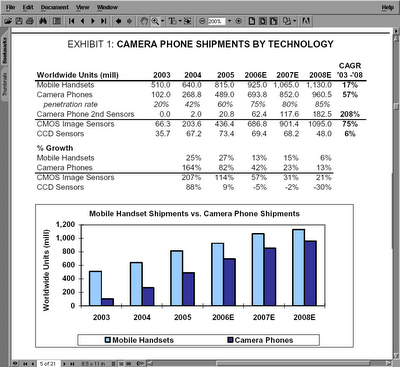
Some camera-phone market data, including projections for phones with 2 cameras on-board (click to expand):
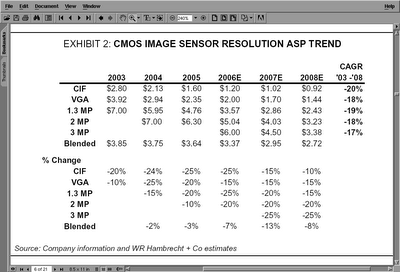
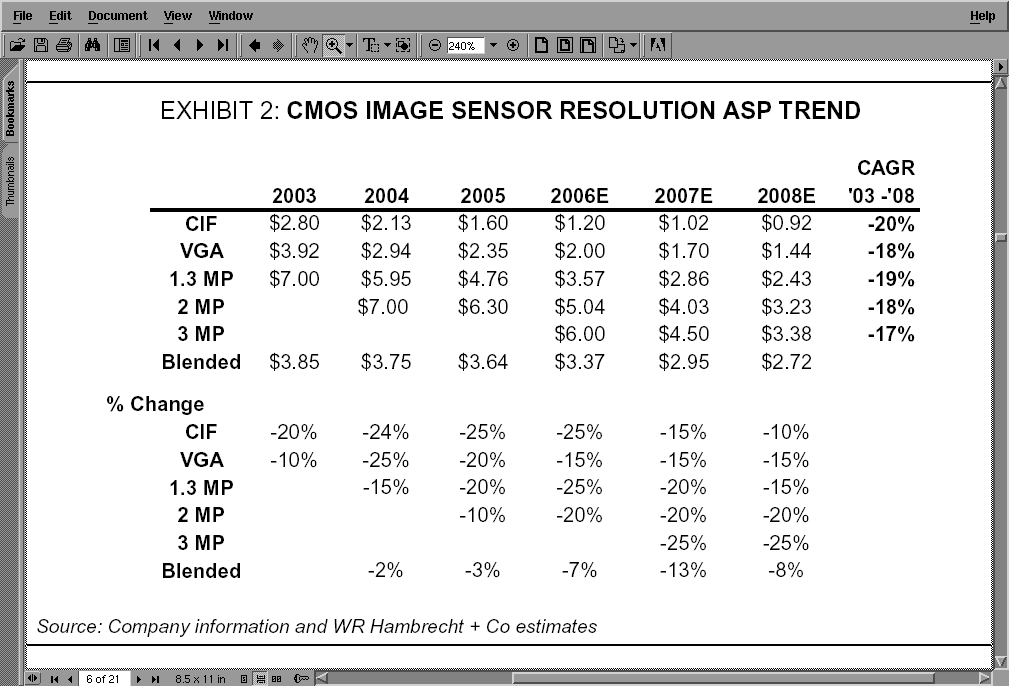
Camera-phone sensor resolution and ASP trends and projections:
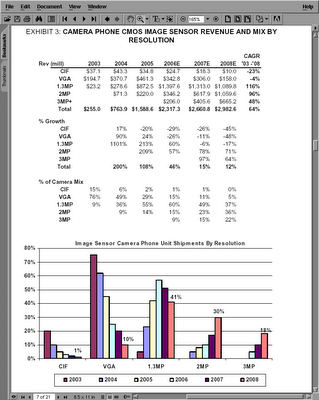
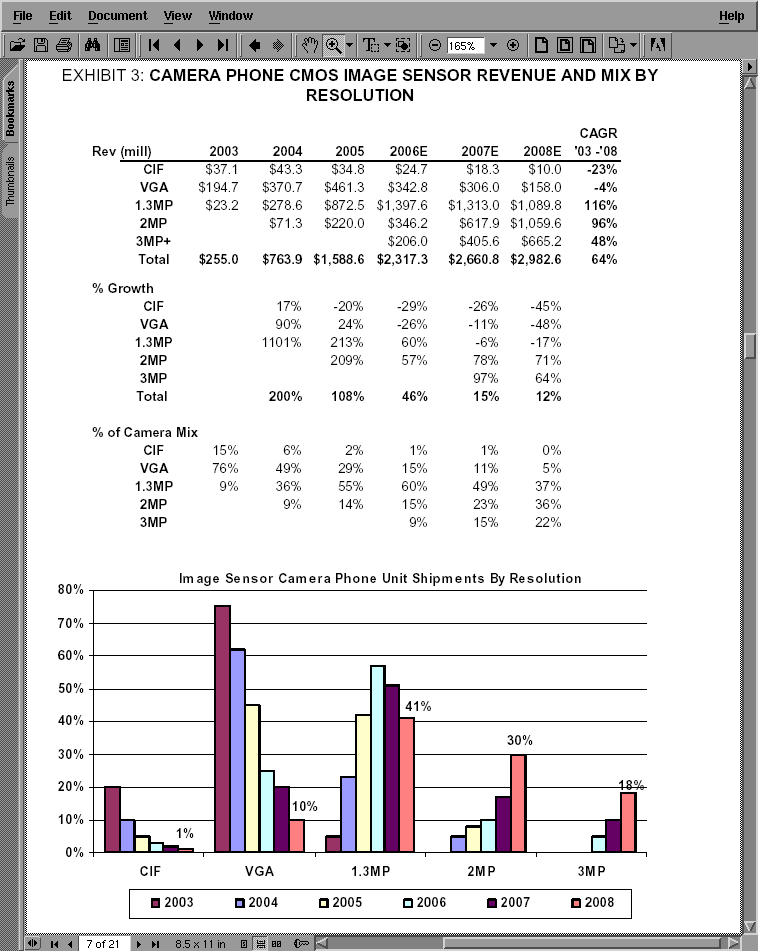
Market segmentation data:
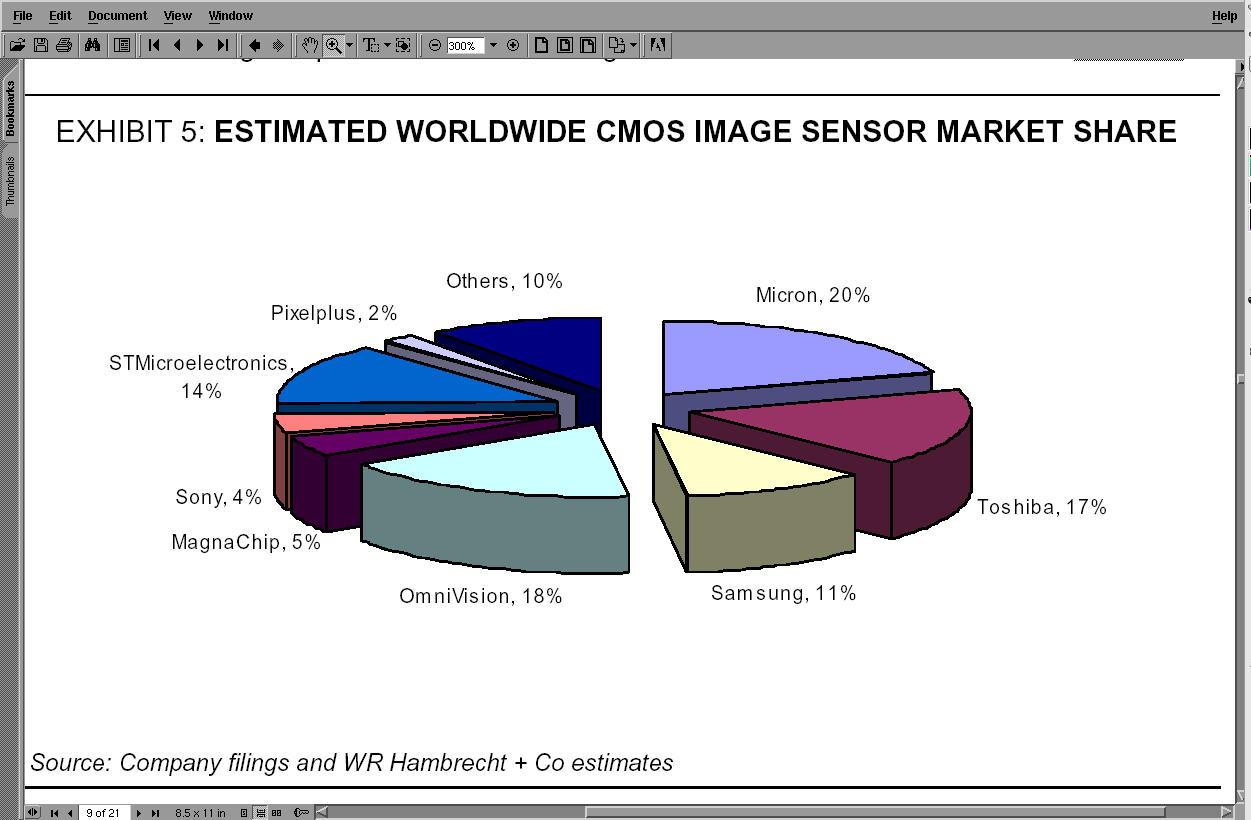
Market shares chart - it's not clear if it covers whole CMOS sensor market or only camera-phone sensors. Also, the analysis time frame is not clearly stated. Here it is anyway:

The report stresses that Pixelplus uses 3T pixel technology, while most of other market players moved to 4T. Pixelplus adds some CCD functionality to 3T pixel (this probably means a pinned photodiode) and also enjoys better yield and cost of older process.
Pixelplus currently employs total about 86 people with 27 in R&D and 14 in marketing and sales.
Pixelplus customer list includes Pantech, Rohm, Seiko Precision and SII, Sharp, LG, Logitech, BYD, China TechFaith, DART Express, DK Semicon, Ningbo Bird, Cellon.
Its current fab partner is DongbuAnam for 0.18um process and Pixelplus is process of qualifying UMC 0.13um image sensor technology.
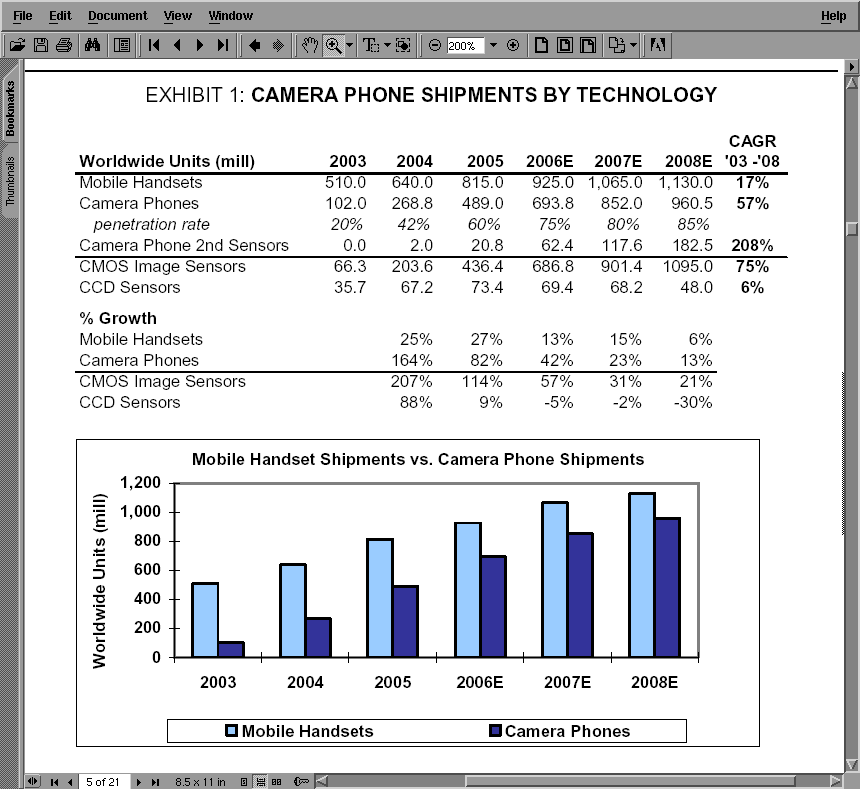
Some camera-phone market data, including projections for phones with 2 cameras on-board (click to expand):
Camera-phone sensor resolution and ASP trends and projections:
Market segmentation data:
Market shares chart - it's not clear if it covers whole CMOS sensor market or only camera-phone sensors. Also, the analysis time frame is not clearly stated. Here it is anyway:
Saturday, May 20, 2006
Micron 8MP Sensor Presentation Pictures
Japanese digital photography site Impress Watch published pictures from Micron MT9E001 8MP 1.75um sensor presentation by Hisashi Suzuki, Micron's director of marketing.
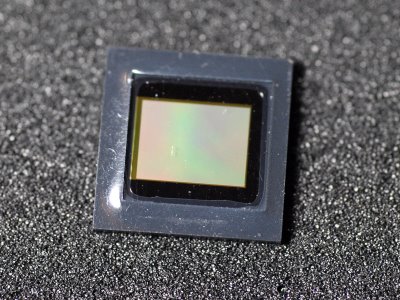
The prototype sensor looks rather half-baked on this picture:
The presentation also mentioned 8MP 1/3.4" sensor with 1.4um pixels, targeted for cellular phones. Here is Micron readmap and history of pixel shrink:

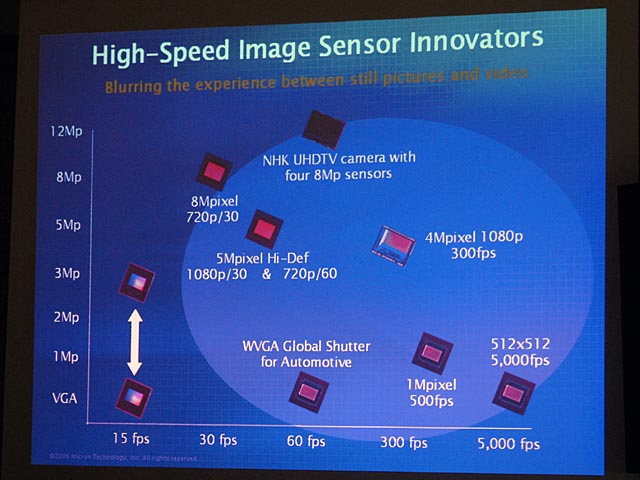
Micron's impressive portfolio of fast image sensors:

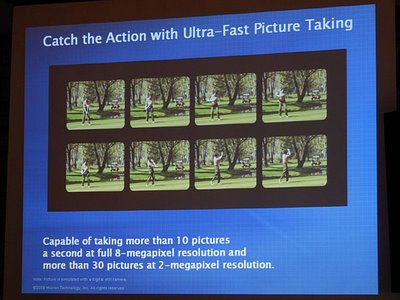
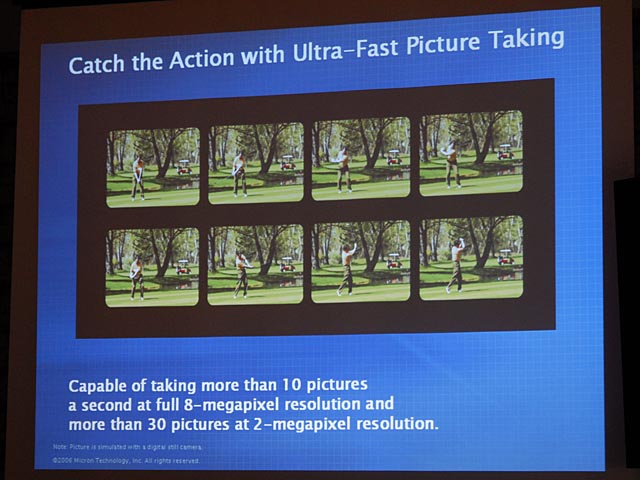
Micron once again emphasizes the speed of the new sensor:
Here is Micron's demo board:
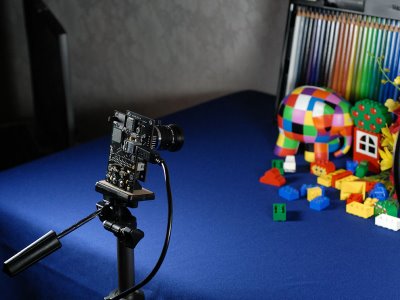
The board was connected to plasma display. No full resolution sample image is published so far.
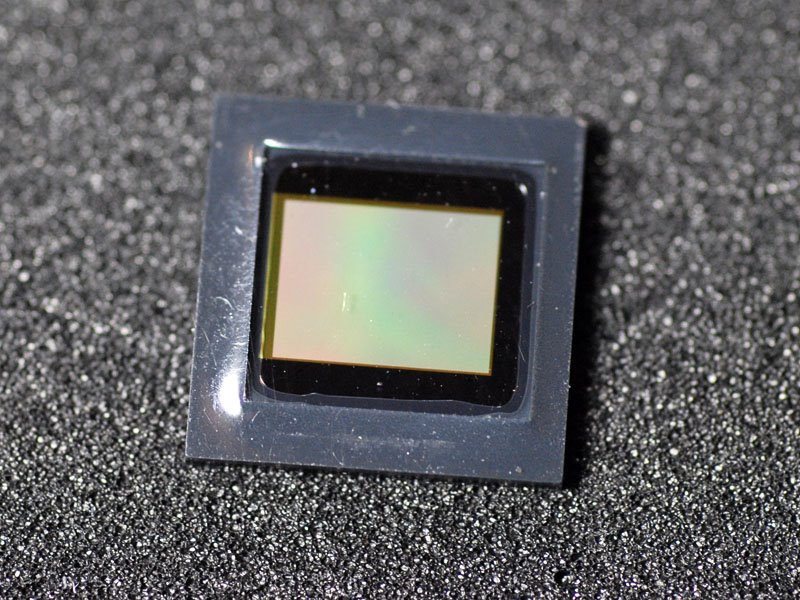
The prototype sensor looks rather half-baked on this picture:
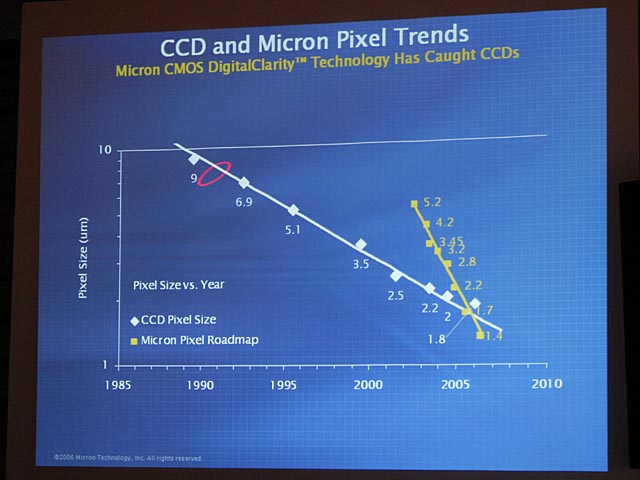
The presentation also mentioned 8MP 1/3.4" sensor with 1.4um pixels, targeted for cellular phones. Here is Micron readmap and history of pixel shrink:
Micron's impressive portfolio of fast image sensors:
Micron once again emphasizes the speed of the new sensor:
Here is Micron's demo board:
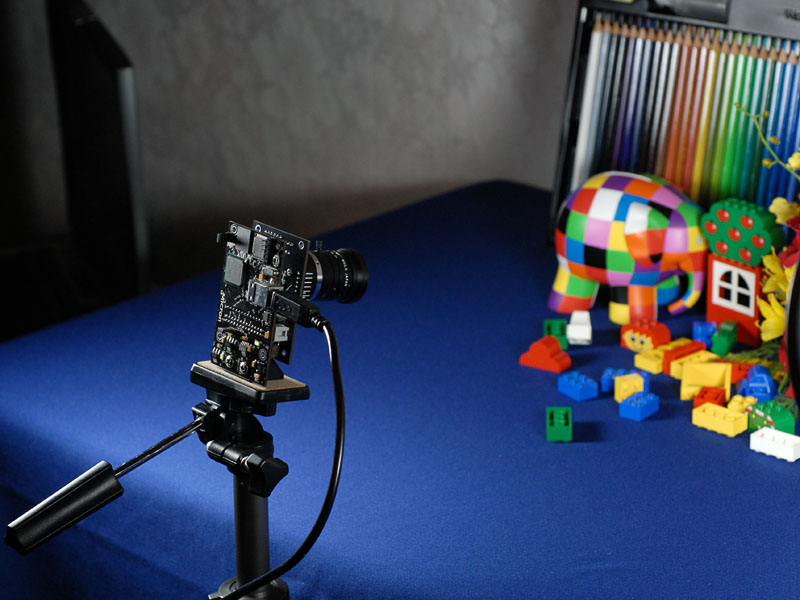
The board was connected to plasma display. No full resolution sample image is published so far.
Thursday, May 18, 2006
Micron 8MP Sensor Flyer
Micron published a flyer on 8MP 1.75um pixel prototype. A few additional details include 12b dual ADC and 2.8/1.8 dual supply. The flyer states that chief ray angle is just 7.5deg. - way too small for an efficient optics. If not a mistake, this might indicate a serious limitation of the new Micron 1.75um pixel.
Micron's Day Goes On: 8MP and 1.4um Pixel Double Announcement
Today is the Micron Day in world's press. A few hours after the previous announcement Micron reveals that the new 8MP sensor uses the new 1.75um pixel (Yahoo!):
"Using a tiny 1.75-micron pixel design, Micron Technology (NYSE:MU - News), Inc., has built the world's first 8-megapixel image sensor in a 1/2.5-inch optical format, the standard size for mainstream digital cameras."
Also, the press release mentions it's a prototype, rather than production-ready sample. Sampling is planned for the fall of 2006 with mass production expected in the first half of 2007.
Even more exciting news is that Micron announced its work on a 1.4-micron pixel and unveils pictures taken with test chip. No details is given about this new generation pixel.
"Using a tiny 1.75-micron pixel design, Micron Technology (NYSE:MU - News), Inc., has built the world's first 8-megapixel image sensor in a 1/2.5-inch optical format, the standard size for mainstream digital cameras."
Also, the press release mentions it's a prototype, rather than production-ready sample. Sampling is planned for the fall of 2006 with mass production expected in the first half of 2007.
Even more exciting news is that Micron announced its work on a 1.4-micron pixel and unveils pictures taken with test chip. No details is given about this new generation pixel.
Micron Announced Fast 8MP Sensor
Yahoo!: Micron announced 8MP sensor "that enables pocket-sized cameras and cell phones to capture bursts of 10 high-quality photos in a single second or even high-definition video."
"Micron's new sensor includes a faster processor that eliminates usual point-and-shoot delays between taking pictures. That means users can shoot up to 10 images per second at 8-megapixel resolution or 30 frames per second at a resolution of 2-megapixels."
Following last month's Sony fast sensor announcement, Micron too said: "The sensor's rapid capture rate and high resolution also allows smaller cameras to incorporate features such as image stabilization."
No word on pixel or sensor size, but with imminent introduction of 1.75um pixel generation one can safely assume the new sensor uses this latest generation of pixels.
"Micron's new sensor includes a faster processor that eliminates usual point-and-shoot delays between taking pictures. That means users can shoot up to 10 images per second at 8-megapixel resolution or 30 frames per second at a resolution of 2-megapixels."
Following last month's Sony fast sensor announcement, Micron too said: "The sensor's rapid capture rate and high resolution also allows smaller cameras to incorporate features such as image stabilization."
No word on pixel or sensor size, but with imminent introduction of 1.75um pixel generation one can safely assume the new sensor uses this latest generation of pixels.
Subscribe to:
Posts (Atom)