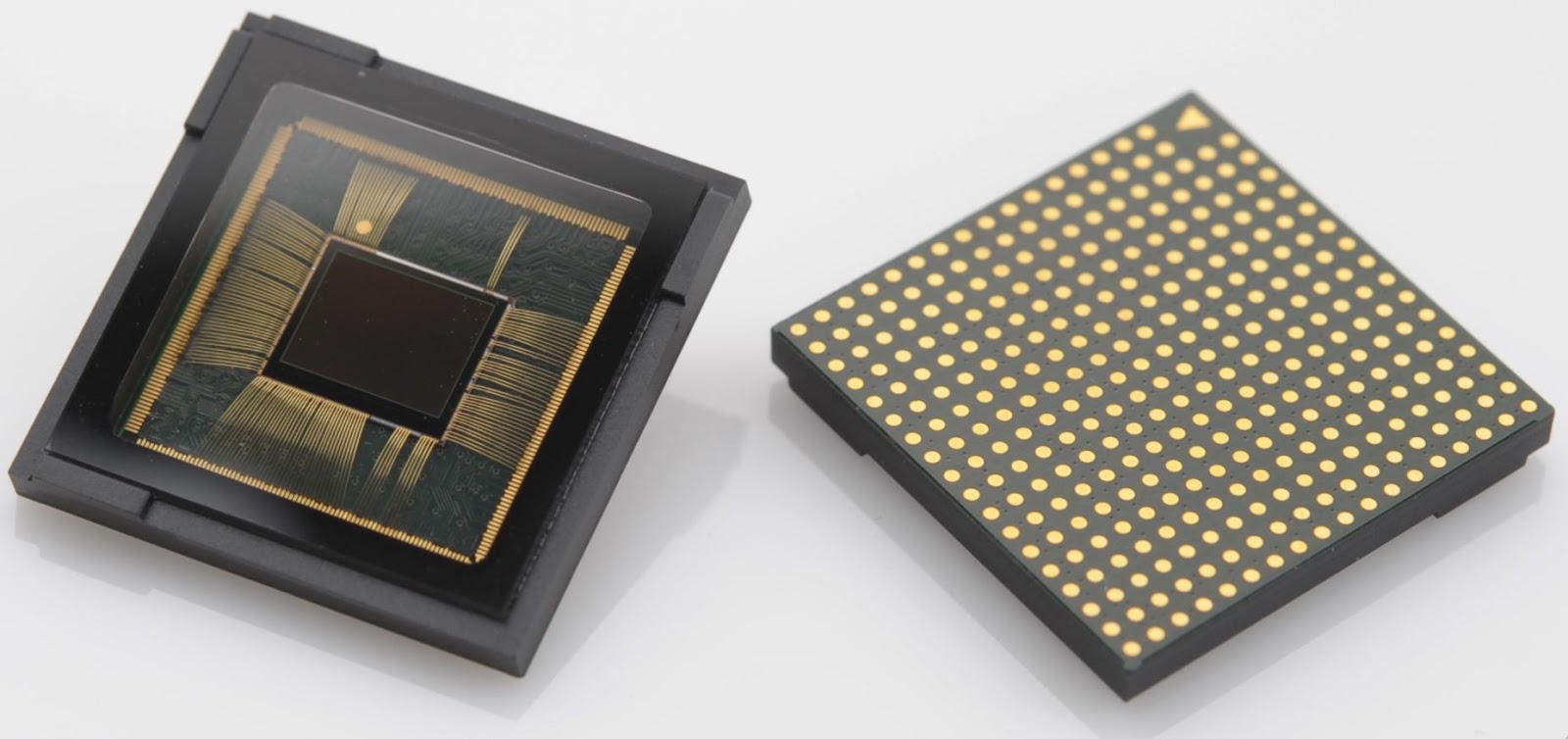
Phonearena quotes Finnish-language Taskumuro site making an unscientific comparison of Samsung Galaxy S7 equipped with Sony IMX260 and Samsung S5K2L1 dual-pixel AF sensors. One can judge the differences on real-life subjects with HDR mode off (many more pictures on the original site):
Sony sensor, click & download for full resolution
Samsung sensor, click & download for full resolution
More PhoneArena thoughts on the comparison is here.
PRWeb: MEMS Drive and OPPO come up with a joint press release on their MEMS-based SmartSensor, the first image sensor-based image stabilizer for smartphones, also said to be the industry’s first sub-pixel-level optical image stabilizer.
While VCM smartphone cameras are limited to shake compensation on just two axes of movement, the new MEMS-based approach compensates for motion on three axes. This additional degree of mobility is said to vastly outperform traditional OIS technologies for smartphones, because it is faster – compensating for vibrations in 15 ms compared to 50 ms for lens-based technologies – and more accurate, and it allows for significantly lower power consumption.
MEMS Drive was founded to develop and advance the field of MEMS OIS technology for smartphone cameras. “The collaboration with OPPO has been very successful. The fact that OPPO is taking such an active role in co-developing this technology with MEMS Drive is accelerating our roadmap, and will ultimately come to benefit smartphone users sooner,” said Colin Kwan, CEO and founder of MEMS Drive.
“OPPO recognized that the MEMS Drive OIS actuator could vastly improve the end users’ camera experience. We therefore decided to invest in MEMS Drive and to co-develop the SmartSensor image stabilizer, and bring yet another significant advance in smartphone technology to market,” said King Liu, VP of Product Development at OPPO.
I missed this news from about a month ago, when Sharp presented the quarterly results for its fiscal Q3, ended on Dec. 31, 2015. Its imaging products sales rise nicely to all times high:
New Imaging Technologies introduces the NSC1401, an analog WDR QVGA InGaAs sensor series. The sensor uses a new generation of ROIC with a 320x256 pixels at 25um pitch coupled to an InGaAs retina that operates in WDR mode and global shutter. The spectral response ranges from 900nm to 1700nm. Its AFE provides ultra fast response time down to 200ns for applications such as active imaging. The sensor operates both in linear integration mode and in log response at speeds up to 300fps at full resolution.
One of NIT customers postes a WDR video shot with its older NSC1003 GS sensor:
BusinessWire: Samsung announces its 12MP, 1.4um dual pixel sensor for smartphones, already in mass production. The dual pixel is said to enable rapid AF even in low light situations.
“With 12 million pixels working as a phase detection auto-focus (PDAF) agent, the new image sensor brings professional auto-focusing performance to a mobile device,” said Ben K. Hur, VP Marketing, System LSI Business at Samsung. “Consumers will be able to capture their daily events and precious moments instantly on a smartphone as the moments unfold, regardless of lighting conditions.”
The new image sensor employs two PDs located on the left and right halves of a pixel, while a conventional PDAF-equipped sensor dedicates less than 5% of its pixels, with one photodiode each that converts light particles into measurable photocurrent for phase detection. As each and every pixel of the Dual Pixel image sensor is capable of detecting phase differences of perceived light, significantly faster auto-focus has become possible, especially for moving objects even in poor lighting conditions.
The image sensor has also adopted Samsung’s ISOCELL technology, which isolates the photodiodes in each pixel with a physical wall to further reduce color cross talk, maximizing the image sensor’s performance.
The new image sensor is built with chip-stacking technology: a 65nm sensor on top of 28nm logic chip.
Meanwhile, GSMArena found an unscientific Youtube comparison of speeds of Galaxy S7 dual pixel AF and Canon EOS 70D DSLR dual pixel AF:
Chipworks publishes an update on Sony IMX260 dual pixel AF sensor, found in Samsung Galaxy S7:
"Our lab staff have completed the initial cross-sectioning work for our IMX260 project and we have a substantial update to share: the Sony IMX260 is, in fact, a stacked chip CMOS image sensor! As mentioned, we had expected to find through silicon vias (TSVs) consistent with Sony’s Exmor RS technology platform. Our early teardown results revealed what appeared to be a conventional Sony non-stacked back-illuminated (Exmor R) chip. After going deeper inside, we see that Sony is leading the digital imaging sector into an era of hybrid bonding. It’s not currently known if Sony considers this an extension of its Exmor RS platform, or if the IMX260 marks the first of a new (as of now unannounced) family of back-illuminated image sensors. For now we consider the IMX260 to be a 3rd generation Exmor RS chip.
Our cross-section reveals a 5 metal (Cu) CMOS image sensor (CIS) die and a 7 metal (6 Cu + 1 Al) image signal processor (ISP) die. The Cu-Cu vias are 3.0 µm wide and have a 14 µm pitch in the peripheral regions. In the active pixel array they are also 3.0 µm wide, but have a pitch of 6.0 µm. Note that in the images we’ve included we do see connections from the Cu-Cu via pads to both CIS and ISP landing pads."
"Major industry players—such as ON Semiconductor, CMOSIS, e2v, and Sony — have grown even larger as they’ve acquired smaller challengers, yet they continue to compete to strengthen their hold on existing markets and their competitive position with new customers as the demand for devices that rely on image sensors expands.
For end customers, industry consolidation means the promise of innovation leading to new, higher-quality sensors that deliver greater features and functionality, and are available at a lower cost.
The image sensor industry holds a vast repository of intellectual property and consolidation among former competitors will result in the integration of this intellectual property and the sharing of best practices, which in turn, should facilitate improved image sensor quality. In fact, CMOS image sensor quality has already improved in recent years.
The cost of image sensors and the price of the cameras or other products in which they’re incorporated will continue to decrease as the remaining competitors jockey for expanded market share, and consumers will be the beneficiaries."
Boston University Associate Professor Vivek Goyal lecture "First-Photon Imaging and Other Imaging with Few Photons" is published on Vimeo:
Abstract:
"LIDAR systems use single-photon detectors to enable long-range reflectivity and depth imaging. By exploiting an inhomogeneous Poisson process observation model and the typical structure of natural scenes, first-photon imaging demonstrates the possibility of accurate LIDAR with only 1 detected photon per pixel, where half of the detections are due to (uninformative) ambient light. I will explain the simple ideas behind first-photon imaging. Then I will present related subsequent works that enable the use of detector arrays and improve robustness to ambient light."